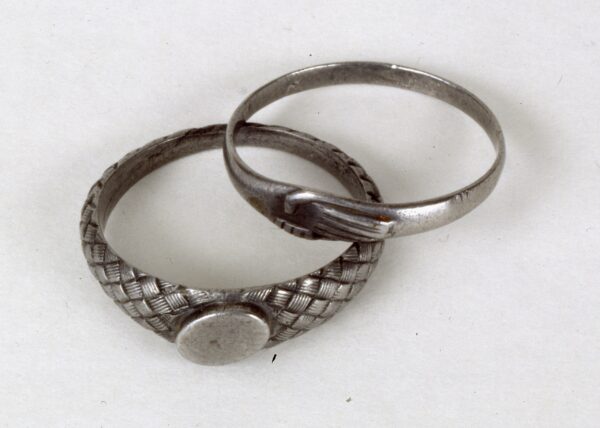
The “shackles” of the Decembrists
After the events of December 14, 1825, the participants in the uprising, sentenced to hard labor, were kept in shackles to further humiliate them—from the trial itself until 1829, when the Tsar allowed the shackles to be removed.
Some Decembrists wore shackles only on their hands, while others, deemed the most guilty, wore them on both their hands and feet. The bundle of shackles weighed between 3 and 9 kg. They had to wear them around the clock, even at night, and were allowed to remove them only for the bathhouse and church.

Decembrist Alexander Belyaev wrote: “Who will believe it, but I will tell the truth: we felt sorry for these shackles, which we had become accustomed to over the course of these three or four years and which nevertheless remained for us resounding witnesses to our love for the Fatherland.”n penal servitude, convicts studied foreign languages and mastered a wide variety of trades, from watchmaking and shoemaking to carpentry and joinery.

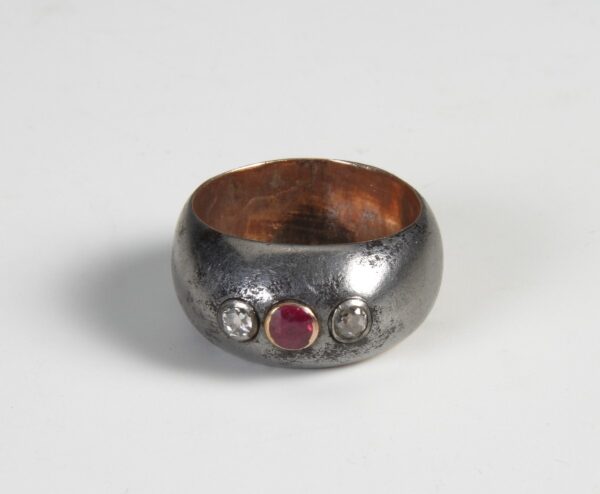
The two Bestuzhev brothers learned jewelry making, and it was probably for this reason that Mikhail suggested using the iron from their shackles to make commemorative jewelry: “The idea for iron rings occurred to me first. At that time, I had moved on to metalworking and goldsmithing, all the more readily because I had a lenient mentor in my brother, and all the necessary tools at my disposal. I had the idea of making iron rings for my sisters and mother. When, in Chita, by a gracious manifesto, our chains were removed from us, I and some of my comrades, having given a soldier some vodka and given him some gifts from our meager wardrobe, hid our chains, and they served as the first material for the rings. Soon, with my brother’s help, I made five more, this time lined with gold taken from the rings of our ladies, who had given them up so that my brother and I could make identical iron rings for them.”

The first rings made from shackles were pure iron, but they were uncomfortable to wear—where the iron touched the skin, rust constantly formed, staining the hands. So Mikhail Bestuzhev came up with the idea of making the inner ring gold, taking the gold from the rings of the Decembrist wives he had brought with him.
Under the guidance of the Bestuzhev brothers, some other exiles learned to make rings with gold backings, so that almost all the women who went into exile, and many convicts, acquired these insignia.
Besides the rings made by the Decembrists in penal servitude and exile, there is another type of shackle ring. Returning from Siberia after Alexander II’s amnesty, some Decembrists took fragments of their chains with them and had new rings made in Russia. Sergei Volkonsky, for example, commissioned a signet ring with his initials for himself, while his wife’s ring featured a cross as a symbol of the “cross” Maria Nikolaevna bore throughout her years of exile.
Currently, museums hold approximately twenty rings made of shackle iron, crafted for exiled Decembrists and their wives. Some rings remained in the families of the Decembrists’ descendants—for example, two years ago, one such ring was auctioned.